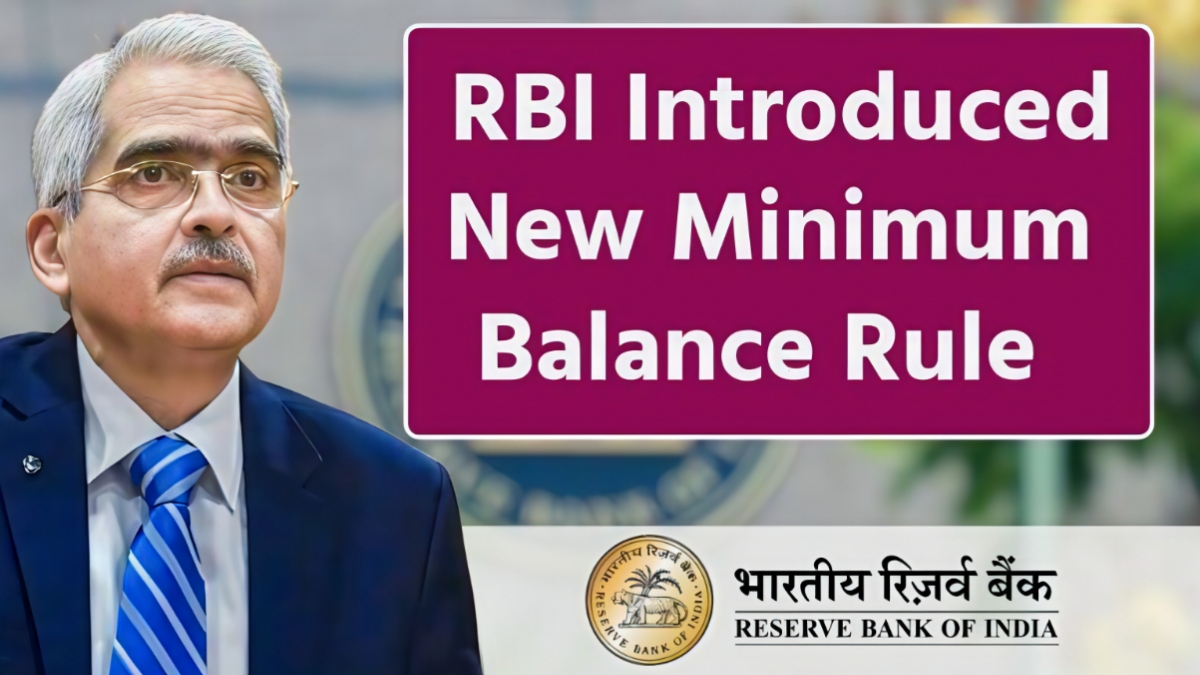
New Minimum Balance Rules: For most Indians, a savings account is not a financial product that demands daily attention. Salaries come in, bills go out, and the balance in between is often taken for granted. Yet, over the years, minimum balance rules have quietly turned these everyday accounts into a source of irritation, especially when unexplained penalties suddenly appear. With the Reserve Bank of India (RBI) preparing a new framework on minimum balance requirements from January 2026, that uneasy relationship between banks and customers is once again under the spotlight.
The RBI’s proposed overhaul is not about fixing one uniform balance amount for everyone. Instead, it focuses on clarity, disclosure, and accountability areas where customers have long complained of being left in the dark. As banking expands beyond branches into apps, fintech platforms, and bundled digital services, the central bank believes old practices no longer reflect how people actually use their accounts. The coming changes could reshape how banks price basic services and how customers choose the accounts they live with every day.

Why Minimum Balance Rules Have Become a Flashpoint
Minimum balance norms were once a relatively simple concept. A bank required a modest amount to remain in the account, largely to cover servicing costs. Over time, however, those limits crept upward, particularly in urban areas and private banks. Customers often found that what applied last year quietly changed the next, with penalty charges deducted before any explanation arrived.
RBI data from banking ombudsman reports has repeatedly highlighted balance-related grievances as a major source of complaints. Many account holders argue that penalties feel less like service charges and more like a tax on low balances. This growing unease, combined with inconsistent rules across banks, created the pressure for RBI to step in not to micromanage banks, but to ensure customers are not blindsided.

What the RBI’s 2026 Framework Is Trying to Fix
At the heart of the RBI minimum balance rules 2026 is a push for transparency. Banks will still be allowed to decide their own balance thresholds, but they must clearly explain them at the time of account opening and whenever changes occur. The regulator wants to eliminate vague fine print that only surfaces when a penalty is charged.
Equally important is accountability. Under the new approach, penalties for falling below the minimum balance must be linked to actual service costs and communicated upfront through slabs or ranges. This is a subtle but meaningful shift. Instead of treating penalties as a flexible revenue stream, banks will be expected to justify them as part of a disclosed service structure.

Who Will Feel the Impact First
Savings account holders in cities are likely to notice the earliest changes. These accounts typically carry higher minimum balance requirements than their rural counterparts, sometimes running into several thousand rupees. While RBI has not indicated that these gaps will disappear, it has made clear that customers must be informed in plain language about what they are signing up for.
Students, pensioners, and low-income earners groups that often struggle with rigid balance norms—could see indirect benefits. Banks may be encouraged to design more segmented products, offering basic accounts with fewer penalties alongside premium options with higher balance requirements and bundled benefits. For small traders and current account users, clearer justification of charges may become the norm rather than the exception.

Zero-Balance and Jan Dhan Accounts: No Sudden Shocks
One of the biggest anxieties surrounding the 2026 changes has been the fate of zero-balance accounts, especially those under the Pradhan Mantri Jan Dhan Yojana. RBI officials have been careful to reassure that financial inclusion remains a core priority. These accounts will continue to enjoy protection from mandatory minimum balances.
That said, banks may draw firmer lines between basic access and optional perks. Features such as unlimited free transactions, premium debit cards, or value-added digital services could come with conditions. This model is already common internationally and allows banks to keep essential banking affordable while charging for add-ons. For customers, the trade-off will at least be clearly spelled out.

Digital Banking and Fintech Platforms Under Tighter Watch
India’s digital banking boom has added another layer of complexity. Many neo-banking apps operate through partnerships with traditional banks, leaving customers unclear about which rules apply. Under the RBI’s new guidelines, these arrangements will no longer sit in a grey zone.
Users can expect clearer alerts on apps when balances dip below required levels, along with better disclosure of penalties. According to fintech analyst Ananya Kulkarni, “The biggest gain here is trust. When customers know exactly what will happen if their balance drops, they are less likely to feel cheated even if a charge applies.” Over time, this could strengthen confidence in digital platforms rather than restrict their growth.
Public Reaction, Policy Signals, and What Comes Next
Public sentiment around the RBI minimum balance rules 2026 has been cautious. While many welcome the emphasis on transparency, others worry that banks may simply rename charges instead of reducing them. On social media, calls for an outright cap on penalties are growing louder, though RBI has so far stopped short of such direct intervention.
In policy terms, the move fits into a broader attempt to modernise banking without sacrificing consumer protection. Industry watchers expect detailed RBI circulars well before January 2026, giving banks time to adjust and customers time to review their accounts. The real test will lie not in the rules themselves, but in how strictly they are enforced.
Disclaimer: This article is based on regulatory discussions, policy signals, and industry analysis available at the time of writing. Final RBI notifications, bank-specific minimum balance rules, penalty structures, and implementation timelines may change. Readers are advised to rely on official RBI circulars, bank communications, or professional financial advice before making decisions related to bank accounts or minimum balance requirements.